• Skip to primary navigation
  • Skip to main content
  • Skip to primary sidebar
Kinney Brothers Publishing Logo

Kinney Brothers Publishing

ESL Teaching & Publishing

  • Kinney Brothers Publishing
  • KBP Shop
  • Games+
  • About Us
  • Contact
  • Press

Search Results for: history in publishing

Fun Facts About English #9 – The Oldest English Word

05/13/2019 by admin

Fun Facts About English 9 Kinney Brothers Publishing

The earliest form of English is called Old English or Anglo-Saxon. Researchers have determined that town is the oldest word in the English language, originates from Old English, and has kept the same definition through the millennia. Evidence of the extent of the Anglo-Saxon settlements are found in the number of place names throughout England ending with -ton, meaning “enclosure or village” (e.g., Taunton, Burton, and Luton).

The convention of using -ton was carried across the Atlantic, with my own hometown of Burlington, Iowa in the U.S. being an example. Originating from ‘Bridlington,’ a place name in East Yorkshire, England, the town was formerly pronounced locally as ‘Burlington,’ and is recorded in the Domesday Book as Bretlinton ‘estate.
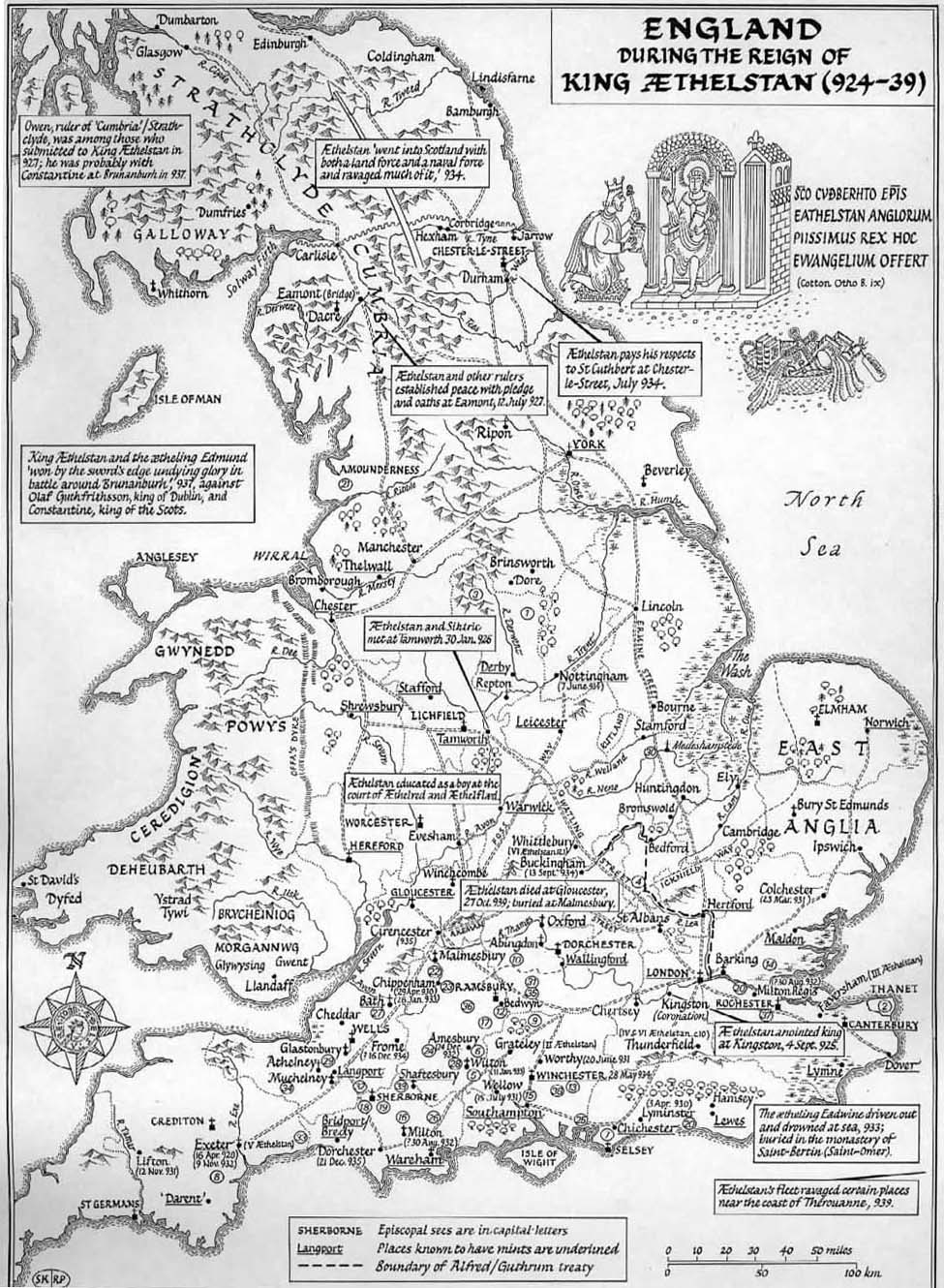
Map of Anglo Saxon Britain
Click to see larger. A large-scale map of Britain in the reign of King Æthelstan. Map drawn by Reginald Piggott for Simon Keynes.

It is estimated that about 85% of the 30,000 or so Anglo-Saxon words gradually died out under the cultural onslaught of the Vikings and the Normans who came after them. On the other hand, up to half of everyday modern English is typically made up of Old English words. Equally surprising, almost all of the hundred most commonly used words in modern English are of Anglo-Saxon origin.

If you enjoyed this post, you might be interested in learning about the kerfuffle with the I pronoun or the shocking origins of words named after people. If you’d like to learn more about the history of the English language, check out my post The History of English!

See the previous or next Fun Facts About English

Donald's English Classroom

Trends: Business and Culture Reports, Books 1 & 2, brings you sixty topical Business Reports that will entertain, inform, and prompt your adult intermediate and advanced students toward lively discussions. Utilizing charts, graphs, puzzles, surveys, discussion activities, and more, these Business Reports invite students to explore and compare cultural, business, and language matters.

Filed Under: Fun Facts About English Tagged With: anglo saxon, Burlington, cultural shifts, Donald's English Classroom, English language evolution, etymology, fun facts about english, historical linguistics, Iowa, kinney brothers publishing, language origins, linguistic conventions, Old English, place names, transatlantic transmission

Fun Facts About English #8 – The Land of The Tattooed

05/13/2019 by admin

Fun Facts About English 8 KInney Brothers Publishing

The first historical account of the islands of Britain and Ireland was by Pytheas, a Greek from the city of Massalia, who around 310–306 BC, sailed around what he called the “Pretannikai nesoi,” or “Pretannic Isles.” “Pretani” or “Pritani” was understood on the European continent to mean “the land of the tattooed” or “the painted ones.”

When the Romans invaded Britain in 55 BC, they also found the Celtic-speaking natives to be resplendent in body art. In his account of the Gallic Wars, Caesar wrote,

“Al the Britons doe dye themselues wyth woad, which setteth a blewish color vppon them: and maketh them more terryble to beholde in battle.”

From “Pretani,” the name “Britain” was eventually derived. When the Normans arrived in 1066, they too discovered the Britons’ fondness for tattoos. In the 12th Century, the chronicler, William of Malmesbury, described how tattooing was one of the first practices the Normans adopted from the native British people.

British Isles
Click to see larger.

The above map of the British Isles during the Bronze Age is one among many on the Abroad in The Yard website. To read more about the Celtic tribes of Britain, click on the BBC Future article, The name for Britain comes from our love of tattoos.

If you’re interested in learning more about the history of the English language, check out my post The History of English!

See the previous or next Fun Facts About English

Donald's English Classroom

Tic-Tac-Toe is a classic game kids love! Teachers often use the same boards for a simple and quick game of Bingo! Check out all the Tic-Tac-Toe games in Donald’s English Classroom!

Filed Under: Fun Facts About English Tagged With: body art, Britain, British history, British Isles, Celtic tribes, cultural practices, Donald's English Classroom, etymology, fun facts about english, historical accounts, kinney brothers publishing, Norman Conquest, Pytheas, Roman invasion, tattoos

Fun Facts About English #7 – The Most Common Words

05/13/2019 by admin

Fun Facts About English 7 Kinney Brothers Publishing

This is some serious food for thought for all English language teachers around the world:

  • The top ten most-used words, the, be, to, of, and, a, in, that, have, and I, account for a staggering 25% of the entire corpus of the English language.
  • The top twenty-five words in the Oxford English Corpus (OEC) make up about one-third of all printed material in English.
  • The one hundred most commonly used words in English comprise about half of all written English.
  • 90% of English text is made up of just 1,000 words.
Sight Words1

According to a study cited by Robert McCrum in The Story of English, all of the first one hundred of the most common words in English are of Anglo-Saxon origin, except for people, from the Latin populus, and because, in part from the Latin causa.

When it comes to learning English as a foreign language, it goes without saying that memorizing the 1,000 most common words is not going to make you a fluent speaker. It will, on the other hand, be just enough vocabulary to let you hit the ground running when you’re immersed in the language. This also holds true whether you’re learning, French, German, or Chinese!

Sight words make up many of the most commonly used words in the English language. If you regularly teach sight words in class or you’re looking for tips for making sight words more engaging, you might be interested in my post, Sight Words: What, When, & How. To learn more about Old English and the history of the English language, click here to read more!

See the previous or next Fun Facts About English

Donald's English Classroom

I Have Who Has activities are great for vocabulary review. Check out all the available sets in Donald’s English Classroom. Download the most popular I Have Who Has sets in one bundle for incredible savings! Sign up for our monthly newsletter and download our most popular CVC I have Who Has activity for free!

Filed Under: Fun Facts About English Tagged With: common words, Donald's English Classroom, english language, fun facts about english, kinney brothers publishing, language acquisition, language evolution, language immersion, language learning, language teaching, Old English, sight words, vocabulary

Fun Facts About English #6 – The Word With the Most Definitions

05/13/2019 by admin

Fun Facts About English 6 Kinney Brothers Publishing

The 1989 Oxford English Dictionary (OED) lists set with 430 definitions. Although the next printed edition of the OED won’t be published until 2037, its chief editor has announced that run now has 645 definitions.

The OED is the principal historical dictionary of the English language published by Oxford University Press. It traces the historical development of the English language, providing a comprehensive resource to scholars and academic researchers, as well as describing usage in its many variations throughout the world.  The second edition, comprising 21,728 pages in 20 volumes, was published in 1989. The chief executive of Oxford University Press has stated that it is unlikely that the third edition will ever be printed and will appear only in electronic form.

The making of the Oxford English Dictionary is an equally extraordinary story! Here are just a few tidbits about the 70-year effort to bring the work to completion in 1928.

The OED was crowd-sourced!

The editors enlisted the help of the public asking readers to send examples of sentences that could illuminate the meanings of different words. Volunteers mailed thousands of “quotation slips” every day. The first edition was published with the help of more than 2000 volunteers.

The co-founder, Frederick Furnivall was a colorful figure.

Furnivall had a controversy-riddled Shakespeare Society and was also in a six-year feud with the poet Algernon Charles Swinburne. They often traded public insults. Swinburne mocked Furnivall’s club by calling it “Fartiwell and Co.” and “The Sh*tspeare Society.” Furnivall returned the insult saying Swinburne had “the ear of a poetaster (inferior writer), hairy, thick and dull.”

The most prolific contributor to the OED was a madman.

Sri-Lankan-born, William C. Minor, was an American ex-pat and paranoid schizophrenic who was institutionalized for murder in England. He was confined to Britain’s Asylum for the Criminally Insane, Broadmore, a fact that OED editor, James Murray, was unaware of until he visited the lexicographical researcher in his jail cell.

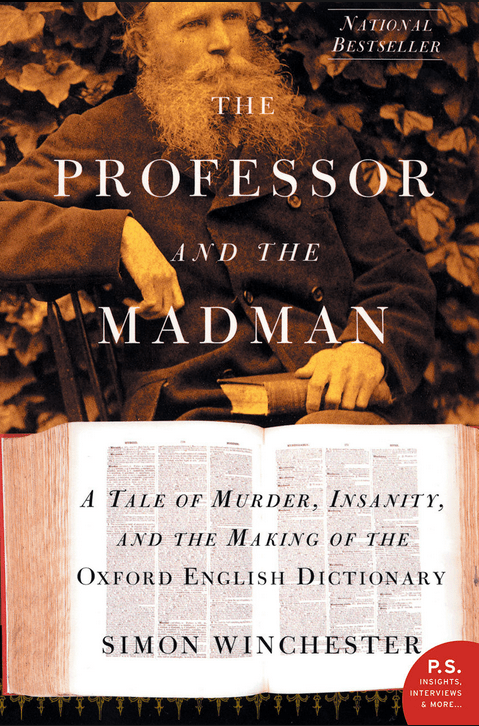
The Professor and The Madman

If you are looking for an entertaining read, The Professor and the Madman, by Simon Winchester, is “an extraordinary tale of madness, genius, and the incredible obsessions of two remarkable men that led to the making of the Oxford English Dictionary—and literary history.”

If you enjoyed this post, you may also be interested in the making of the first dictionary of the English language, why Americans say zee instead of zed, or how the rhotic /r/ sound changed in Britain!

See the previous or next Fun Facts About English

Donald's English Classroom

Fishing is one of my kids’ favorite activities and so easy to set up! Whether you’re teaching the ABCs, CVC words, or sight words, these versatile fishing cards can be used for games, sorting, and ordering activities. You can check out each set by clicking on the links here: ABC Fishing, Sea Fishing, Sentence Fishing, and Sight Word Fishing.

Filed Under: Fun Facts About English Tagged With: Donald's English Classroom, english language, Frederick Furnivall, fun facts about english, historical dictionary, kinney brothers publishing, language evolution, lexicography, linguistic history, OED, Oxford English Dictionary, Simon Winchester, William C. Minor, word definitions

Fun Facts About English #4 – Flutterby or Butterfly?

05/10/2019 by admin

Fun Facts About English 4 Kinney Brothers Publishing

The short answer is – likely not.

Firstly, why is a ‘butterfly’ called a ‘butterfly’? According to the Oxford English Dictionary, though the etymology is quite old, the reason for its name is unknown. However, two possible derivations are offered. 1) The word is from the Anglo-Saxon butterfleoge (literally, butterfly) so-called after the yellow species of Papilionoidea. 2) Butterflies were on the wing in meadows during the spring and summer butter season while the grass was growing.

If you’re a believer in the tales of old wives or fairies, there’s the notion that butterflies are witches in disguise who consume butter that is left uncovered. As for the word ‘flutterby,’ it’s been suggested that it’s simply the case of a child’s habit of transposing syllables, like ‘basketti’ for spaghetti, and ‘pillercat’ for caterpillar.

Literary references to ‘flutterby’ are very few. One example is from Nonsense, an 1867 book by American journalist, Marcus M. (Brick) Pomeroy:

Beautiful as a flutterby,
And none could compare
With my pretty little charmer
And her rich, wavy hair.

Whether butterfly or flutterby, there’s no reason both can’t be used. To those who object, you can simply state, “You’re not the boss of me.” The flying insect has also been used as a colorful metaphor and apropos descriptor for a very long time. They include:

  • Vain and gaudy attire – 1600
  • A transformation from a lowly state – 1806
  • A type of mechanical nut – 1869
  • Flitting tendencies – 1873
  • One-act play Madame Butterfly: A Tragedy of Japan, New York – 1900
  • Socially extroverted female (opposite of wallflower)
  • Anxiety, nervousness – 1908
  • A swimming stroke – 1935
  • Predictability; cause and effect – 1972

Interested in more posts about peculiar words? Check out the awesome history of the word dude, why Americans prefer the word rooster, or what the word jaywalker actually means!

See the previous or next Fun Facts About English

Donald's English Classroom

Check out A Telling Story Productions on Youtube or Donald’s English Classroom for audio readings of some of your favorite fairy tales! They’re great for storytime, bedtime, and when traveling with kids!

Filed Under: Fun Facts About English Tagged With: butterfly, Donald's English Classroom, etymology, flutterby, folklore, fun facts about english, history, kinney brothers publishing, language, linguistic, metaphors, origin

Interactive Notebooks (INBs)

05/09/2019 by admin

There came a point where I had to intervene. My students’ notebooks were a disordered mess and their bags, when emptied, were a junk pile of crumpled papers, loose cards, and past games. Taking action, I began to roll out a program using interactive notebooks.

Be sure to check out my post on CVC Interactive Notebook templates!

What is an Interactive Notebook?

You may have seen references to INBs, ISNs, or INs, all of which refer to a decades-long trend in education called Interactive (Student) Notebooks. The movement has its history in a tradition of notebooking, scrapbooking and early educators promoting creativity and interaction in student learning.

Nature journals (advocated by 19th-century British educator Charlotte Mason) provide an early example of interactive notebooks. Students began with blank notebooks and either drew or glued a plant or leaf onto a page. Then they wrote about it, labeled it, or included a related poem or thought. Ms. Mason’s Book of Centuries is another example where students explored each century with timelines, drawings, maps, and facts of interest.

The History Alive! social studies program is seen as the genesis of the contemporary interactive notebook movement. Developed in the 80s and 90s by educators at Teacher’s Curriculum Institute, History Alive! is a series of instructional practices that allow students with diverse learning styles to “experience” history. Beginning with the idea that students should be allowed to construct their own knowledge, the teachers created dynamic and highly interactive teaching strategies.

So, what is it about interactive notebooks that have attracted so many educators? How do they benefit and what can be gained for students and teachers?

Here are 7 reasons to use interactive notebooks in class by Jennifer Smith Jochen, of Smith Curriculum and Consulting, on the Minds in Bloom blog.

  • Interactive notebooks teach students to organize and synthesize their thoughts.
  • Interactive notebooks accommodate multiple learning styles at one time in (and out of) the classroom.
  • Student-teacher-parent interaction is built and strengthened with the use of interactive notebooks.
  • Students are building a portfolio that allows for teachers to track growth over time.
  • Interactive notebooks have students create a resource to use as they continue to extend their learning.
  • Students take ownership of their learning through color and creativity.
  • Interactive notebooks reduce clutter in the classroom, as well as in students’ lives.

Getting Started

When setting up an INB, whatever the subject, teachers regularly include a cover page, table of contents, a rubric for grading the notebooks, an agreement between student and teacher for the upkeep of their notebooks, and finally, a strategy for dividing the notebook into school terms and/or units taught.

When working with a two-page layout, the right-side pages are often reserved for teacher input (teacher-generated notes and handouts) and student output is on the left side — paralleling right/left brain activity. American educator and Wisconsinite, Angela Nerby, explains the breakdown of the interactive notebooks used in her 2nd-grade classes in multiple step-by-step blog posts at Hippo Hooray Teaching.

Tips for newbies:

  • Use sturdy notebooks; preferably with sewn-in pages.
  • Create a model notebook that you can use for planning and demonstration.
  • Number the pages from the outset so that everyone is on the same page.
  • Tape or create a large pocket for unfinished page elements.
  • Tape or hot glue a ribbon bookmark to the inside back cover.
  • Use liquid glue or tape. Pages glued with glue sticks quickly fall apart.
  • Have a place for students to access materials like glue, scissors, and paper. Establish a routine for cutting, pasting, and cleanup.
  • Take students step by step through the layout process with your demo book and sample elements. Stress from the beginning cutting and pasting techniques.
  • Carry through with the notebook project! The first year is going to teach you a lot about planning, organizing, and executing your INB. Use your demo book to make notes about what worked well and what needs improvement.

To help get you started, download the above templates that include a variety of basic manipulatives in pdf and png formats. They’re free, and please feel free to use them.

On the Flip Side

What interactive notebooks are NOT:

  • INBs are NOT a replacement for students taking notes. It is a center for interaction.
  • They are NOT a replacement for a textbook. However, a textbook can’t give you everything you need when teaching. I began using interactive notebooks for topics that were not covered in the textbook: picture dictionaries, songs and chants, sight word practice, extra writing practice, dictation, vocabulary activities, dialogues, clockwork, and cursive writing practice.
  • Foldables and flip-flaps can be amazing tools but they are NOT what defines an interactive notebook. What makes a notebook interactive is that an active connection occurs between the page and the mind of the student.

Check out the book, Interactive Notebooks and English Language Learners, by Marcia Carter, Anita Hernandez and Jeannine Richison. The authors write about addressing the needs of second language learners and how an “Interactive Notebook can be used to scaffold content to move English language learners (ELLs) to the stage where they are academic language learners (ALLs).”

Making learning fun…

In this video, Nassrin Rabi, an elementary ESL teacher in Tel Aviv, demonstrates creating a prepositions of place page for her students’ INBs. You can check out more of her videos on her Youtube channel.

This is from Victoria of CrazyCharizma, an educator known for her unique and creative materials for your INBs. Download a free version of the typewriters and try them out in class!

Since Charlotte Mason’s Nature Notebooks, and the exploratory work done by the Teacher’s Curriculum Institute, we’ve moved into the digital age — and it’s pounding on our classroom doors. If you work in a blended classroom or teach online, creating online interactive notebooks in Google Classroom helps students negotiate digital tools that are necessary to their academic and professional futures.

Here is a nine-minute video demonstration by David Lee, an EdTech Specialist at Singapore American School, showing his kids how to navigate a digital science interactive notebook.

If you’ve ever been discouraged or at a loss with your students’ notebook habits, take the initiative and give interactive notebooks a try. Yes, they are a lot of work, but the rewards for teachers, students, and parents are worth the effort!

As always, best of luck in your classes!

Donald Kinney

Kinney Brothers Publishing

Filed Under: Kinney Brothers Publishing Tagged With: Charlotte Mason, classroom management, classroom organization, creative teaching, digital notebooks, Donald's English Classroom, education tools, educational blogging, educational resources, History Alive, INBs, Interactive Learning, interactive notebooks, ISNs, kinney brothers publishing, learning styles, student engagement, student notebooks, Teacher guides, Teaching strategies

  • « Go to Previous Page
  • Page 1
  • Interim pages omitted …
  • Page 7
  • Page 8
  • Page 9
  • Page 10
  • Go to Next Page »

Primary Sidebar

Search

New from Susan Good!

Balancing Remote Work and Toddler Care

Kinney Brothers Publishing

Kinney Brothers Publishing Catalogue

Donald’s English Classroom

Donald's English Classroom Catalog

Click to see full listings!

Jooble Ad ESL Tutor Jobs

Weekly Fun Facts About English!

Fun Facts About English

Now in Japan!

Independent Publishers International

Copyright © 2026 · Genesis Sample on Genesis Framework · WordPress · Log in


Loading Comments...